
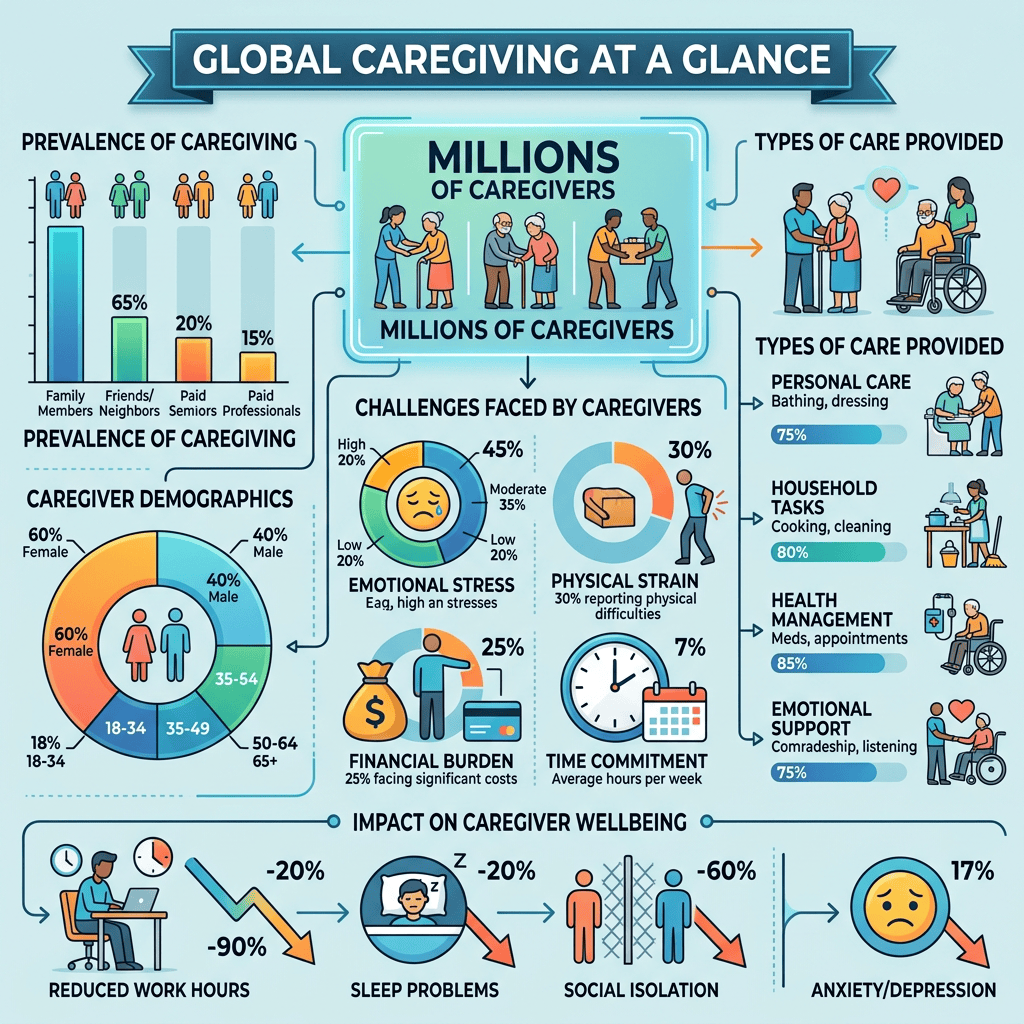
Connect, Communicate, Cope: Navigating the Caregiver’s Burden
Caregiving is a profound blessing, but it carries a heavy, often invisible physical and emotional weight.
To understand the reality caregivers face, consider these sobering figures on the burden of caring for family members:
The Reality by the Numbers
- 13 days per month: Spent on basic support tasks like grocery shopping, cooking, housekeeping, laundry, transportation, and administering medication.
- 6 days per month: Dedicated directly to personal physical care, including feeding, dressing, grooming, bathing, and mobility assistance.
- 13 hours per month: Spent researching conditions, scheduling doctors, and managing financial logistics.
- Weekly Hours: Family caregivers average 24.4 hours per week—with nearly 1 in 4 investing 41 hours or more. Those living under the same roof spend an average of 40.5 hours per week.
- Duration: The average caregiving role lasts 4 years.
The 3 C’s Framework for Care Teams
Whether you are giving or receiving care, navigating this journey requires intentional effort across three areas:
1. Connect
- Understand the load: Acknowledge the physical and emotional exhaustion caregivers manage daily.
- Practice patience: Both caregiver and recipient are adjusting to changing roles and dynamics.
2. Communicate
- Express full-spectrum needs: Talk openly about physical, emotional, mental, and spiritual challenges.
- Discuss end-of-life plans: Have tough conversations early. Remember: a funeral service is for the living to find closure, so clear planning brings peace to everyone involved.
3. Cope
- Face difficulty together: Coping means dealing effectively with a hard situation step-by-step.
- Give grace: Recognize that caregivers are coping as best they can under immense pressure.


