
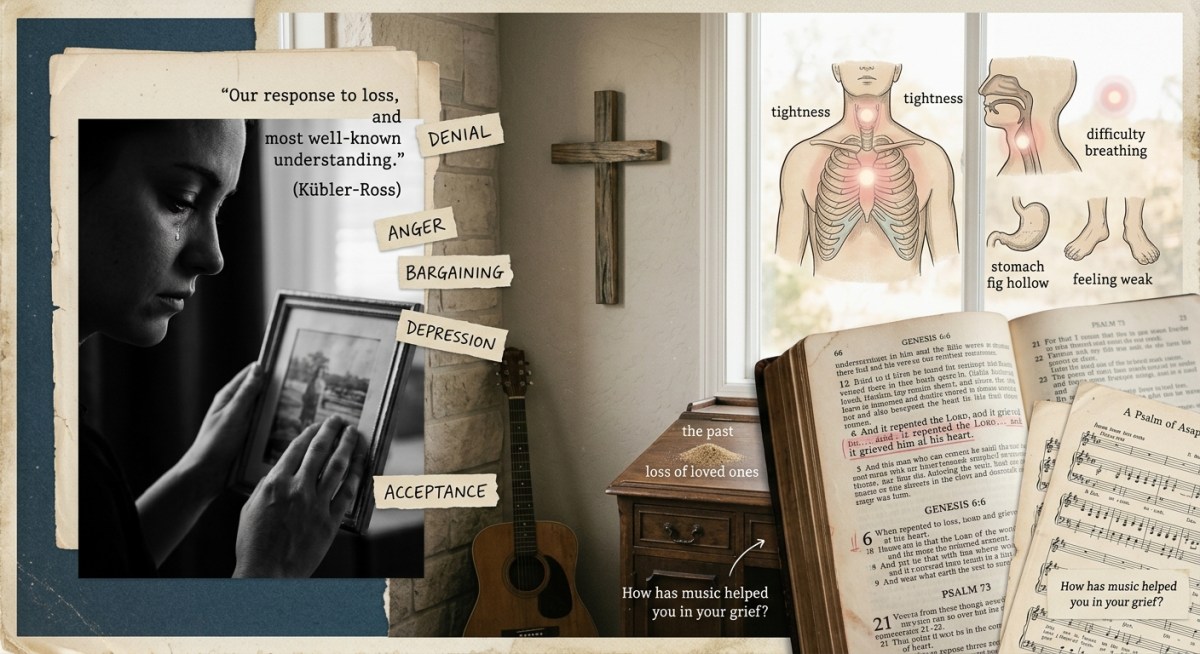
Understanding Grief: From Modern Psychology to Sacred Scripture
Grief is a universal human experience, yet it often feels intensely isolating when it arrives. At its core, grief is our natural response to loss. We don’t get to choose whether we grieve—we only choose how we live through it or ignore it.
Whether you are navigating the loss of a loved one, a career, a relationship, or simply the passing of time, understanding what happens to our minds, bodies, and spirits can help us find a path forward.
What Do We Grieve?
Grief isn’t limited to death. We experience loss whenever something central to our life changes or ends:
- Loved Ones: Family, friends, and pets.
- Relationships: Broken connections, divorce, or drifting friendships.
- Life Paths: Career transitions, missed opportunities, or lost dreams.
- The Past: Nostalgia for times, places, or versions of ourselves that no longer exist.
The 5 Stages of Grief
In 1969, psychiatrist Elisabeth Kübler-Ross outlined five common stages of grief (often abbreviated as DABDA). While grief is rarely linear, these stages frame how we process deep loss:
- Denial:“This can’t be happening.”
- Anger: Resentment directed outward, toward ourselves, or at God.
- Bargaining: Asking “what if” and seeking ways to reverse the loss.
- Depression: Deep sadness and withdrawal as the reality sets in.
- Acceptance: Coming to terms with the new reality.
The Physical Toll of Grief
Grief is not just an emotional state; it lives in the body. You might recognize several physical warning signs:
- Chest & Throat: Tightness, heaviness, or difficulty breathing.
- Stomach: A hollow feeling, loss of appetite, or nausea.
- Energy & Sleep: Exhaustion, constant fatigue, or trouble sleeping.
- Senses: Hypersensitivity to noise or feeling physically numb.
Grief in Scripture: A Deeply Human Emotion
Scripture does not shy away from grief. Across the Old Testament, roughly 20 different Hebrew words describe grieving—each capturing a distinct physical or emotional dimension of loss.
1. Grief Hits the Heart First
The first mention of grief in the Bible appears in Genesis 6:6:
“And it repented the LORD that he had made man on the earth, and it grieved him at his heart.”
Grief is not a weakness; it is a reflection of deep care. Even the divine heart experiences sorrow over brokenness.
2. Grief Wastes the Body and Eyes
Biblical writers often connected sorrow to the physical breakdown of the body—especially the eyes. Tears cloud our vision, and emotional pain drains our physical strength:
- Psalm 31:9:“My eye is wasted away from grief, my soul and my body too.”
- Psalm 6:6:“I am weary with my sighing; every night I make my bed swim, I flood my couch with my tears.”
- Job 17:7:“My eyes have grown dim with grief; my whole frame is but a shadow.”
3. Grief, Anger, and Bitterness
In Psalm 73:21-22, the psalmist Asaph writes with radical honesty about how unprocessed grief changes us:
“When my heart was grieved and my spirit embittered, I was senseless and ignorant; I was a brute beast before you.”
When grief turns to bitterness, it warps our perspective. Asaph—a chief musician and prophet—used music and poetry to express these raw, uncomfortable feelings to God rather than suppressing them.
Finding a Way Through
Grief demands to be felt. Whether through honest prayer, creative expression like music, or simply allowing yourself time to rest, acknowledge where you are in the process today.
 going into the gym focusing on my breath. Breathing In, Breathing Out. Over and over again. Gently pushing intruding thoughts to the side.
